Table of Contents
- Why Music Is a Gateway to Confidence for Shy Children
- How Music Lessons Improve Self-Esteem
- Choosing the Right Instrument for a Quiet Child
- Building a Safe, Non-Judgmental Learning Environment
- Step-by-Step: Getting Started With Private Music Lessons
- Benefits of Private Music Lessons for Children
- Managing Your Own Anxiety as a Parent
- Frequently Asked Questions
Last Updated: October 4, 2026
Why Music Is a Gateway to Confidence for Shy Children
Music has a unique power to unlock something inside quiet kids, and shy children gain confidence music offers in private lessons is transformative. At 380 Music Studio, we help shy children transform through music lessons, not by forcing them on stage, but by building confidence one small step at a time.
Shy children often carry anxiety about being judged or making mistakes. Music lessons flip that script: they’re learning with a teacher who believes in them, in a safe space where the instrument becomes a way to express feelings they can’t put into words.
The beauty of music is that it doesn’t demand perfection right away. A child can play one note badly and still feel proud. That’s where confidence starts: in tiny wins that add up. Research shows that music education supports emotional development and self-expression in children, which helps shy kids find their voice gradually.
How Music Lessons Improve Self-Esteem
Private music lessons create a judgment-free zone where shy children can be themselves. A good teacher notices small improvements and celebrates them, that positive reinforcement is where real confidence grows.
Self-esteem builds when a child feels seen and supported. In a private lesson, the teacher focuses entirely on that one student, no comparison to other kids, no audience, just learning.
Kids start believing they can learn new skills. They feel proud when they play something they couldn’t play before. They develop patience with themselves and learn that struggle is normal, not a sign they’re bad at music.
The progress is real. A shy child who couldn’t hold the guitar without shaking might play a full song. That’s not magic. That’s a supportive environment doing its job.
Choosing the Right Instrument for a Quiet Child
The instrument choice matters for a shy child’s confidence. The right one feels like an extension of themselves.
The best instrument for a shy child matches how they process the world, their sensory preferences, emotional style, and what feels safe to them.
Sensory Considerations for Shy Children
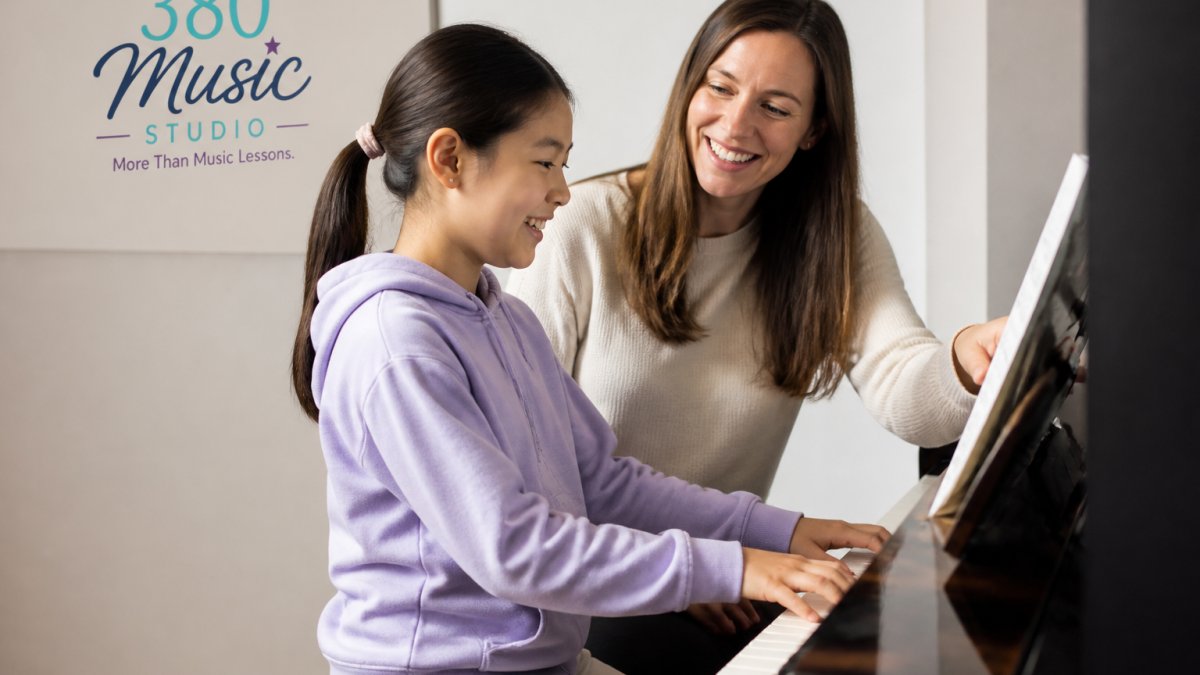
Piano works well for sensory-sensitive kids: each key produces a consistent, predictable sound; the child controls volume from the start; feedback is immediate and clear.
Guitar appeals to kids who like portability, tactile feedback, and a more intimate sound.
Violin suits emotionally expressive children drawn to beautiful, singing sounds who are patient with a slower learning curve.
Voice is the most personal instrument and works beautifully for shy children with the right teacher. A teacher at 380 Music Studio knows how to build confidence without pushing a child to perform before they’re ready.
Drums and percussion can help some shy children: the focus is on rhythm and pattern, not melody, and the physical act can be grounding.
What to Avoid (and Why)
Some combinations backfire: loud instruments without volume control can overwhelm sensory-sensitive kids; instruments requiring immediate “prettiness” can discourage perfectionists; instruments demanding physical confidence can add social anxiety.
Let Your Child Lead (With Teacher Guidance)
Ask your child what sounds good to them. A shy kid who says “I like how piano sounds” or “I want to try guitar” is telling you something real about what will keep them engaged.
Bring that preference to your teacher at 380 Music Studio. Your child’s teacher will listen to what appeals to them, assess their physical comfort and sensory profile, consider their personality, and adjust if the initial choice isn’t working.
Building a Safe, Non-Judgmental Learning Environment
A safe environment is where confidence grows, a space where mistakes are welcome and your child can try something hard without shame.
A safe environment means the teacher listens more than they talk, treats mistakes as learning, measures progress against the child’s own growth, explains clearly, and makes lessons feel like a conversation, not a test.
At 380 Music Studio, our teachers understand that every child learns differently. A shy child might need more time to warm up, reassurance, or instruction explained multiple ways, that’s what good teaching looks like.
Step-by-Step: Getting Started With Private Music Lessons
Starting lessons can feel scary for a shy child. Breaking it into small steps makes it manageable.
Step 1: Have an Honest Conversation About Interests
Talk to your child about music: “What music do you like? What instrument sounds cool to you?” Listen without judgment. A shy child who chooses their own path is more likely to stick with it.
Step 2: Meet the Teacher Before Committing
Your child should meet the teacher first in a casual way, not a formal audition, just a conversation. A good teacher will ask about their interests, show them the instrument, explain what lessons will be like, and make them feel comfortable without pushing them to perform.

Step 3: Start With Low-Pressure Lessons
The first few lessons should be about exploration, not performance. Good first lessons include learning how to hold the instrument, playing one or two simple things, and setting a small, achievable goal. Keep expectations low, a shy child’s first win might be just showing up and trying.
Step 4: Celebrate Small Wins at Home
When your child comes home from a lesson, ask what they learned, not how well they did. Celebrate effort: “You learned a new note!” or “You practiced even when it was hard!” Shy kids need to hear that trying is enough.
Benefits of Private Music Lessons for Children
Private lessons build more than musical skill, shy children gain confidence music instruction provides, developing focus, emotional regulation, resilience, self-expression, and a sense of accomplishment. When a shy child takes private lessons, they develop confidence, focus, emotional regulation, resilience, self-expression, and a sense of accomplishment. These benefits show up in other parts of their life too, a child who gains confidence in music lessons often becomes more willing to try new things and speak up in class.
Music lessons also give your child a healthy break from screens. Time to focus on something real, something they’re building with their own hands and effort.
Managing Your Own Anxiety as a Parent
Here’s what nobody talks about: Your anxiety about your shy child’s confidence is just as real as theirs. And it matters more than you think. If you’re worried they’ll fail, they’ll feel it. If you’re nervous about whether lessons are “working,” that tension transfers directly to them. A shy child is already hyperaware of judgment, including yours.
Your mindset shapes their experience more than the lessons themselves.
The Fear That Keeps Parents Stuck
Most parents of shy children carry a specific, unspoken fear: What if my child gets laughed at? What if they fail and it makes them even more withdrawn?
This fear is real. And it’s often what stops parents from starting lessons in the first place. You might think: “My child is already anxious. Adding performance pressure could backfire.”
But here’s what actually happens in private lessons: There is no audience. There is no performance pressure. There’s just your child and a teacher who knows how to build confidence without pushing.
The fear of being laughed at usually comes from imagining a public performance or a competitive environment. Private lessons are the opposite. Your child is in a safe room with one adult who believes in them. That’s not a risk. That’s the safest place to build confidence.
Common Parent Anxieties (And What’s Actually True)
“Is my child really learning?”
You might not hear dramatic progress week to week. That’s normal. Confidence builds slowly.
“What if they quit?”
Some kids quit lessons. That’s okay. It doesn’t mean they failed. It might mean that instrument wasn’t the right fit, or the timing wasn’t right.
The goal isn’t to force a child into lessons. It’s to create an experience where they want to come back.
“Am I wasting money?”
This anxiety often masks a deeper fear: What if my child doesn’t “succeed” at this? But success for a shy child isn’t about becoming a musician.
“What if they get frustrated?”
Frustration is part of learning. A shy child especially needs to learn that frustration doesn’t mean failure.
Your job is not to protect them from all discomfort. Your job is to show them that discomfort is survivable.
What You Can Actually Control
You can’t control whether your child becomes confident overnight. You can’t control whether they love the instrument. But you can control these things:
1. Show up consistently. Lessons work because they’re regular. Your child knows they’re coming back next week. That consistency builds safety.
2. Don’t quiz or pressure. When your child comes home, don’t ask “How did you do?” or “Did you play well?” Ask “What did you learn?” or “What was fun?” This shifts focus from performance to learning.
3. Let them practice without hovering. A shy child needs privacy to practice. They don’t need you listening and evaluating. They need space to make mistakes alone.
4. Trust the teacher’s experience. Your child’s teacher has worked with shy kids before. They know what they’re doing. When you trust them, your child feels that trust.
5. Believe in your child out loud. Not “I hope you’re good at this,” but “I believe in you.
6. Ask the teacher questions. If you’re worried, say so. A good teacher wants to know. They can explain what’s happening, adjust the approach, or help you understand what progress actually looks like for a shy child.
The Mindset Shift That Changes Everything
Instead of “I hope my child becomes confident,” try: “I’m creating an environment where my child can discover they’re capable.”
Instead of “What if they fail?” try: “What if they surprise themselves?”
Instead of “I need to protect them from discomfort,” try: “I need to show them that discomfort is safe.”
Your role is not to be the teacher. You’re not responsible for their progress. Your role is to show up, support the lesson schedule, believe in your child, and trust that a good teacher knows how to work with shy personalities. That’s it. That’s enough.
When you release the anxiety and step into that role, your child feels the difference. And that’s when real confidence starts to build.
Frequently Asked Questions
How can music help a shy child build confidence?
Music provides a safe way for shy children to express themselves without words. Through private lessons, a child experiences incremental progress, receives positive reinforcement from their teacher, and gains a sense of achievement. Each small success—learning a new note, playing a song from start to finish, or performing for a parent—builds self-esteem. A supportive teacher creates an environment where mistakes are part of learning, not something to fear, which is especially important for children who are naturally reserved or anxious about being judged.
What instrument is best for a shy or quiet child?
The best instrument depends on your child’s personality and interests. Some shy children connect with piano because it’s visual and allows them to see their progress immediately. Others prefer guitar or ukulele for their portability and the satisfaction of playing songs quickly. Drums and percussion can help reserved children loosen up through rhythm and body movement. Voice lessons work well too, though some quiet children feel less vulnerable starting with an instrument. Your child’s teacher can help identify which instrument matches their comfort level and learning style.
How do private music lessons differ from other learning approaches for building confidence?
Private lessons are personalized to your child’s pace, personality, and goals. A dedicated teacher builds a relationship with your student, understands their anxiety triggers, and adjusts teaching methods accordingly. This one-on-one attention means your child never feels compared to others or rushed. The teacher provides immediate, non-judgmental feedback and celebrates progress in real time. This consistent, supportive relationship is what transforms music from a skill into a confidence-building experience that extends beyond the lesson room into other areas of your child’s life.
What should I do if my child gets nervous about performing or showing their progress?
Start with very low-stakes sharing—playing just for a parent at home, or performing for a sibling. Your teacher can suggest age-appropriate ways to build toward public performance gradually. Some children benefit from playing in a familiar, comfortable setting first. The goal is to help your child associate performance with pride, not panic. Your teacher will guide the pace and create opportunities that feel manageable, whether that’s a small recital, playing for extended family, or simply recording themselves at home. Every child’s timeline is different, and that’s okay.