Table of Contents
- Why Age 5 Is a Great Time to Start Music
- How to Choose a Music Instrument for Your Child
- The 7 Best Instruments for 5-Year-Olds
- How Long Should Music Practice Be for a 5-Year-Old
- Making the Right Fit: Teacher Guidance Matters
- Frequently Asked Questions
Last Updated: September 25, 2026
Age 5 is a magical time to introduce your child to music, and finding the right instruments for 5 year olds makes all the difference. At this stage, kids have the coordination, attention span, and curiosity to start learning a real instrument. At 380 Music Studio, we’ve helped countless families in Aubrey and the surrounding Highway 380 communities find the perfect fit for their child. The right choice depends on your child’s size, personality, and what draws them in, and that’s exactly where a teacher’s guidance makes all the difference.
Why Age 5 Is a Great Time to Start Music
Five-year-olds have the fine motor skills, attention span, and curiosity to start learning a real instrument. They can follow instructions and focus for short periods, making them developmentally ready for music.
Learning instruments for 5 year olds strengthens hand-eye coordination, develops listening skills, and teaches patience and the satisfaction of improvement over time.
Music lessons at this age are about joy, exploration, and building confidence, discovering a creative outlet that stays with them for life.
How to Choose a Music Instrument for Your Child
Picking the right instrument isn’t about what sounds coolest or what you played as a kid. It’s about matching the instrument to your child’s physical development, personality, and what genuinely excites them. This matters far more than most parents realize, the wrong fit can actually discourage learning before your child even gets started.
Physical Fit and Ergonomic Development
An instrument that doesn’t fit properly creates tension, poor technique habits, and frustration that makes practice feel like a chore instead of joy.
Here’s what to assess:
Hand and Finger Reach Your child’s fingers need to comfortably access keys, strings, or valves without overextending. A quarter-size or half-size violin, a soprano ukulele, or a 1/2-size guitar are sized for small hands. On piano or keyboard, your child should sit with feet flat (use a stool if needed) and reach the keys with arms at a natural angle.
Weight and Endurance A heavy instrument causes fatigue and awkward posture. Lighter instruments like a soprano ukulele let kids practice longer without exhaustion.
Posture and Sitting Position How your child sits or stands shapes their developing posture. Piano encourages upright posture naturally. Guitars and ukuleles should be held straight, not hunched. A teacher guides proper positioning from the start so bad habits don’t develop.
Why This Matters for Learning When an instrument fits well, your child focuses on making music instead of fighting discomfort, builds positive associations with practice, and develops correct technique from day one. A teacher assesses your child’s hands and frame during a first lesson and recommends the right size and type.
Your Child’s Personality and Interests
Pay attention to what naturally captures their attention. If they’re always tapping rhythms, percussion might click. If they hum constantly, voice or melody instruments fit better. Some kids thrive with immediate results, ukulele and keyboard deliver quick wins. Others enjoy the gradual journey of building technique. Your child’s teacher can help match their personality to an instrument that will keep them engaged.
The 7 Best Instruments for 5-Year-Olds

1. Piano: Building Foundational Skills
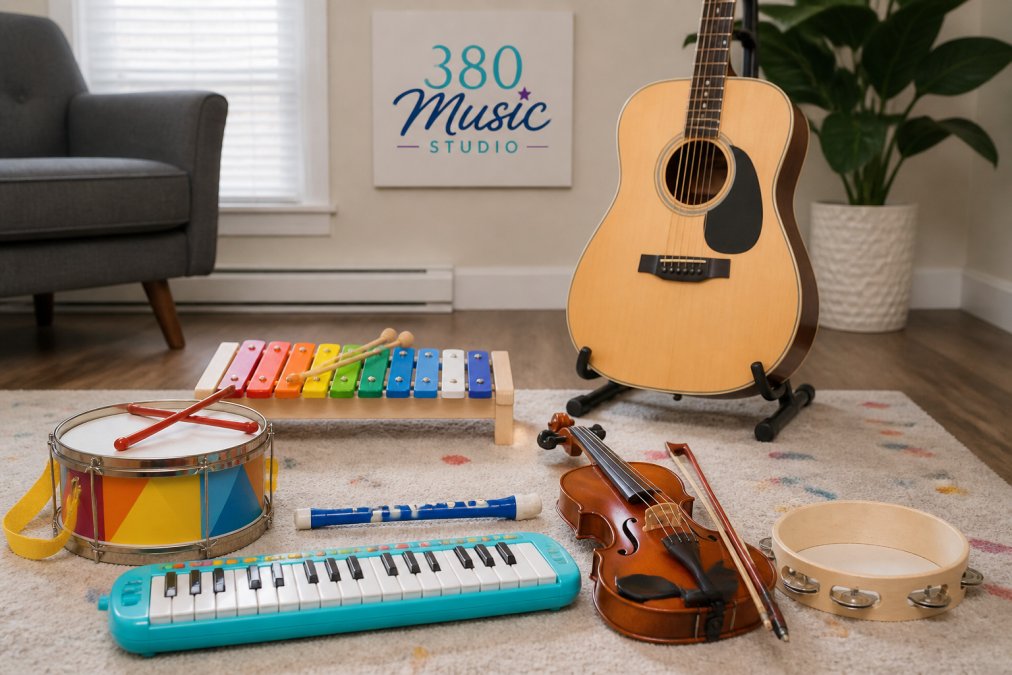
Piano is popular for young learners because the keyboard layout is visual and logical. For 5-year-olds, piano builds foundational skills that transfer to any instrument. A weighted keyboard works best, the keys feel like a real piano and help develop proper technique. Piano does require sitting still, but many restless kids settle down once they’re making music.
2. Ukulele: Small, Approachable, and Fun
The ukulele is small, affordable, and forgiving. A soprano ukulele is perfect for small hands and light enough to avoid fatigue. Kids play recognizable melodies within weeks and feel like musicians fast. The warm, happy sound appeals to young learners and doesn’t demand perfection.
3. Percussion Instruments: Rhythm and Engagement
Percussion isn’t just drums. It includes bells, xylophones, marimba, timpani, and more. For 5-year-olds, percussion builds rhythm sense and hand coordination.
Bells and xylophones are especially good starter options. Kids can play melodies, not just keep time. The visual layout helps them understand pitch. Mallets develop hand strength and control.
Drums appeal to kids who love energy and movement. Playing drums is physical and immediate. Kids feel the beat in their whole body. This works beautifully for children who need to move.
Percussion is also social. It’s the foundation for understanding rhythm in any ensemble later on.
4. Violin: Developing Ear Training and Coordination
Violin looks elegant and sounds beautiful, but it’s challenging for 5-year-olds. The learning curve is steep at first. Notes take time to sound good.
Here’s the thing: kids who stick with violin develop incredible ear training and hand coordination. The bow requires fine motor control. Intonation demands listening skills that sharpen over time.
Violin works best for patient kids who don’t need instant gratification. A quarter-size or half-size violin fits small frames. A good teacher makes all the difference in keeping young violinists motivated through the early stages.
5. Acoustic Guitar: Scaled for Small Hands
Full-size guitars are too big for most 5-year-olds. A 1/2-size or 3/4-size guitar is the answer. At this size, your child can actually reach the fretboard and strings without stretching.
Guitars appeal to kids who dream of playing songs they hear. The ability to play chords and melodies together is exciting. Plus, guitars are cool. Kids see themselves as musicians when they hold one.
Nylon strings are gentler on developing fingers than steel strings. The softer material is forgiving while kids build calluses and finger strength.
6. Keyboard: Digital or Acoustic
A keyboard is similar to piano but often more compact and lighter. Digital keyboards are portable, affordable, and offer fun sounds beyond traditional piano tones.
Keyboards work great for kids who like variety. They can play piano sounds, organ sounds, or silly sounds while learning. The built-in rhythm features help develop timing and groove.
Weighted keys on quality beginner keyboards still teach proper technique. Unweighted keys are easier on young hands but don’t prepare the same way for acoustic piano later.
How Long Should Music Practice Be for a 5-Year-Old
Five-year-olds have short attention spans. Realistic practice is 5 to 15 minutes daily, not an hour. Consistency matters far more than length. But here’s what parents really want to know: how do you actually make practice happen?
Building the Practice Habit
The goal at this age isn’t perfection. It’s consistency and joy. A short daily practice, even 5 or 10 minutes, builds the habit and keeps skills sharp. Your child’s teacher will guide what to practice and for how long, adjusting based on what your child can actually focus on.
The trick is treating practice like brushing teeth: it happens at the same time every day, in the same place, without negotiation. Many families find that practicing right after school or before dinner works best. Your child knows what to expect. The routine makes it easier.
What Motivation Actually Looks Like
Some kids practice without reminding. Others need encouragement. Both are completely normal at this age.
Real motivation doesn’t come from forcing your child to sit down. It comes from celebrating what they can do. When your child plays a song all the way through, that’s worth noticing. When they remember something their teacher taught them last week, that’s progress. When they ask to play their instrument because they want to, that’s the magic moment.
A good teacher makes practice feel rewarding, not like a chore.
When Practice Falls Apart (And It Will)
Some weeks, your child won’t want to practice. They’re tired. They’re frustrated. They’d rather play outside. This is normal, not a sign that music lessons are wrong.
Your Teacher Is Your Partner
Your child’s teacher watches what motivates them. They know when to push gently and when to celebrate small wins. They adjust what to practice based on what’s working. They help you troubleshoot when practice stalls. They turn frustration into motivation and help your child discover that they’re capable of beautiful things.
Making the Right Fit: Teacher Guidance Matters
Here’s what matters most: the right teacher for your child’s personality and learning style.
Frequently Asked Questions
What is the best instrument for a 5-year-old to start with?
The best instrument depends on your child’s personality, hand size, and interests. Piano and ukulele offer beginner-friendly entry points with clear visual feedback. Percussion instruments work well for kids who love rhythm and movement. A teacher at 380 Music Studio can evaluate your child and recommend the right fit based on their individual strengths and learning style.
How do I know if my child is ready for music lessons at age 5?
Most 5-year-olds are ready for music lessons if they can follow simple instructions, focus on an activity for 15-20 minutes, and show curiosity about music or instruments. And individual instruments have factors to consider as well. Every child develops differently, so readiness varies. A teacher can assess your child’s developmental milestones, attention span, and interest level during an initial conversation to confirm they’re a good fit for lessons.
How long should music practice be for a 5-year-old?
Five-year-olds typically benefit from 5-15 minutes of focused practice most days. Short, consistent sessions work better than longer, sporadic ones at this age. Your teacher will help establish a practice routine that fits your child’s attention span and schedule, and they’ll guide you on how to keep practice enjoyable and engaging at home.
Should my child choose their own instrument?
Your child’s interest matters, but instrument selection involves more than preference. Hand size, physical development, and learning goals all factor in. A teacher helps match your child with an instrument that fits their hands, matches their personality, and sets them up for success. This partnership between parent, teacher, and student ensures the right choice from the start.