Table of Contents
- Is It Too Late to Start Learning Piano at 40?
- Benefits of Piano Lessons for Adults
- How Long to Learn Piano for Adults: Setting Realistic Expectations
- Getting Started: What You’ll Need Before Your First Lesson
- Finding a Piano Teacher in Aubrey and the 380 Corridor
- Piano Practice Tips for Busy Adults
- Your First Lesson: What to Expect
- Building Consistency and Overcoming the Learning Plateau
- Frequently Asked Questions
Last Updated: September 30, 2026
Is It Too Late to Start Learning Piano at 40?
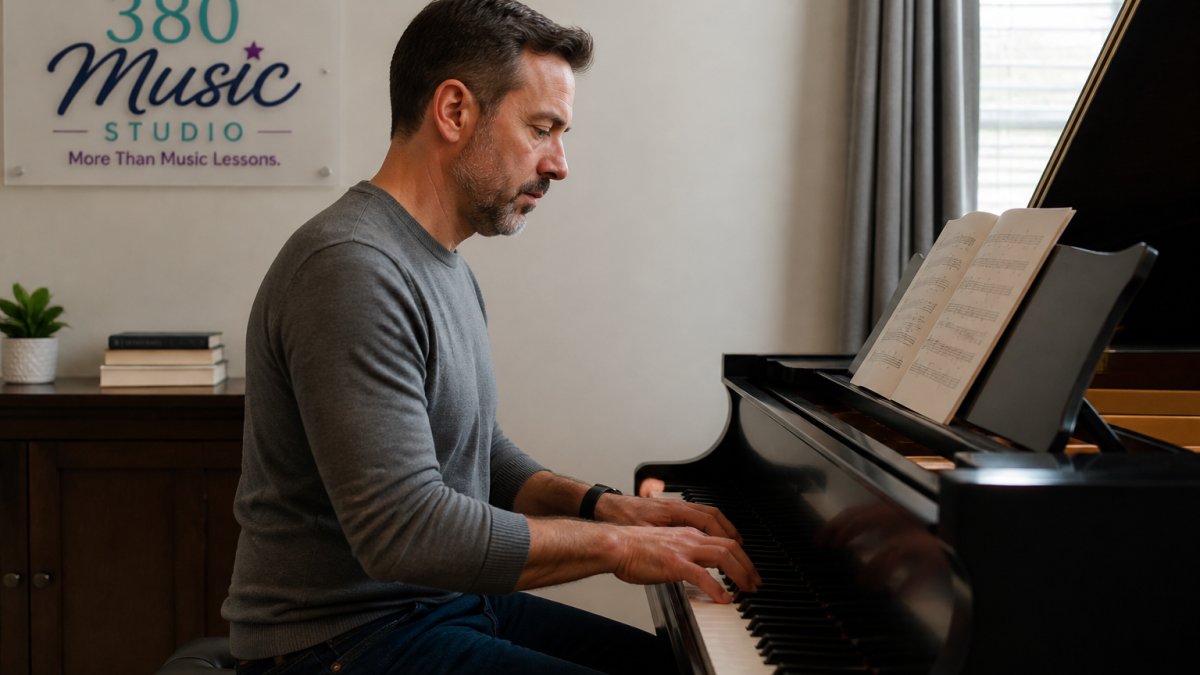
No. Starting piano at 40 is not only possible, it’s increasingly common. Adults bring maturity, focus, and real motivation to learning piano that younger students sometimes lack. Your brain remains capable of learning new skills throughout your life, and music study actually strengthens neural pathways in ways that benefit memory, attention, and problem-solving.
The biggest myth is that you need to start young to succeed. That’s simply not true. At 380 Music Studio, we’ve worked with countless adults who picked up piano in their 40s, 50s, and beyond. They all discovered the same thing: age is far less important than consistency and finding the right teacher who understands adult learners.
What changes at 40 isn’t your ability to learn, it’s your approach. You likely have less time available than a teenager, but you also have clearer goals and the patience to work through challenges without frustration. Many adults find that learning piano at 40 actually feels easier than they expected because they understand how to practice effectively.
Benefits of Piano Lessons for Adults
Learning piano as an adult offers benefits that go far beyond music. When you commit to piano lessons, you’re investing in your whole self.
Cognitive benefits are real and measurable. Playing piano engages multiple brain regions simultaneously. You’re reading music, processing rhythm, controlling hand independence, and listening critically all at once. This kind of mental activity strengthens neuroplasticity, your brain’s ability to form new connections. Many adults report improved focus and memory in other areas of life after starting piano.
Stress relief happens naturally when you play. Music creates a space where you step away from work deadlines, family demands, and daily worries. The act of sitting at the piano, focusing on the music in front of you, and expressing yourself through sound is genuinely restorative.
Creative expression matters more than you might think. If you’ve spent decades in practical roles, managing a career, raising a family, solving problems, piano gives you permission to create something just for the joy of it. There’s no test to pass, no grade to earn. You play because you want to.
Social connection often surprises adult students. When you take lessons, you join a community of people with similar interests. You share progress, encourage each other, and sometimes perform together. At 380 Music Studio, our adult students often become friends.
Confidence and accomplishment build quietly over time. Learning to play a piece you love, mastering a technique that once seemed impossible, or performing for friends, these moments create real pride. That sense of achievement carries into other parts of your life.
How Long to Learn Piano for Adults: Setting Realistic Expectations
The honest answer: it depends on what “learning piano” means to you.
If you want to play simple melodies and enjoy basic songs, most adults see progress within a few weeks. You’ll recognize notes, understand rhythm, and play recognizable tunes.
If your goal is to play the pieces you actually love, whether that’s classical, jazz, pop, or anything else, expect a longer timeline. Many adults find that after 6-12 months of consistent practice, they can tackle moderately difficult pieces. After 2-3 years, they’re playing pieces they genuinely enjoy.
The key word is consistent. An adult who practices 20-30 minutes five times a week will progress much faster than someone who practices an hour once a week. Your brain learns music through repetition and spacing. Frequent, shorter practice sessions work better than rare, long ones. With that said, any practice is better than no practice, and life gets in the way for all of us— professionals included— so don’t think you have to wait for the “perfect” timing to start.
Your teacher plays a huge role here. A teacher who understands adult learners, someone patient, encouraging, and willing to adapt lessons to your pace and goals, makes an enormous difference. At 380 Music Studio, our teachers know that adults learn differently. They adjust their approach based on how you learn best.
Getting Started: What You’ll Need Before Your First Lesson
You don’t need much to start learning piano. But the few things you do need matter.
Choosing an Instrument
A piano or weighted keyboard is essential. The difference between them matters more than you might think.
An acoustic piano gives you the real experience. The keys have weight and resistance that builds finger strength and proper technique. If you have space and budget, an acoustic piano is ideal. But we understand that’s not realistic for everyone.
A weighted digital piano is the practical choice for most adult beginners. “Weighted” means the keys have resistance that mimics acoustic piano keys. This matters, it trains your fingers correctly and builds the strength you need. Look for 88 keys (full keyboard) with weighted action. You’ll also need a stand and a sustain pedal (the pedal that lets notes ring longer).
What to avoid: Unweighted keyboards or cheap electronic keyboards won’t give you proper technique. Your fingers won’t develop the strength and control you need. It’s worth investing in a decent weighted instrument, you’ll progress faster and avoid bad habits.
Your teacher can guide you toward instruments that fit your budget and space. They know what works and what doesn’t.
Setting Up Your Practice Space
You need a quiet place where you can focus for 20-30 minutes without interruption.
This doesn’t have to be fancy. A corner of your living room works fine. What matters is:
- Quiet enough to hear yourself play and to concentrate
- Comfortable seating at the right height (your elbows should bend at roughly 90 degrees)
- Good lighting so you can read sheet music easily
- Minimal distractions during practice time
Many adults practice early in the morning or in the evening when the house is quieter. Some use headphones with their digital piano. The setup matters less than the consistency, if you have a dedicated spot, you’re more likely to practice regularly.
Finding a Piano Teacher in Aubrey and the 380 Corridor
This is the most important decision you’ll make. The right teacher transforms your experience. The wrong one can make it frustrating.
What matters in a piano teacher for adults:
Experience teaching adults is non-negotiable. Teaching a 40-year-old is different from teaching a 10-year-old. Adult learners have different schedules, different learning styles, and different goals. A teacher who specializes in working with adult beginners understands these differences.
Patience and encouragement matter more than technical perfection. You need someone who celebrates your progress, helps you through frustration, and genuinely believes you can do this. Teaching is as much about building confidence as it is about teaching technique.
Flexibility with your schedule and goals is essential. You have a life. Work, family, and other commitments are real. Your teacher should work with your schedule, not against it. They should also listen to what you actually want to play and help you reach those goals.
A teaching style that matches how you learn makes everything easier. Some people learn best by understanding the theory first. Others learn by doing. Some need lots of encouragement. Others prefer straightforward feedback. The best teachers adapt to their students.
At 380 Music Studio, we’ve been serving students in Aubrey and the Highway 380 corridor since 2010. Our teachers know the community. They understand the pace of life here.

Piano Practice Tips for Busy Adults
You’re not going to have hours to practice. You don’t need them.
Your First Lesson: What to Expect
Your first lesson is about connection, not performance. Your teacher wants to understand you.
Building Consistency and Overcoming the Learning Plateau
Consistency is where most adult learners either succeed or quit.
How to push through:
Frequently Asked Questions
Is it really too late to start learning piano at 40?
Not at all. Adults bring valuable advantages to learning piano: patience, discipline, and clear motivation. Your brain retains neuroplasticity well into your 40s and beyond, meaning you can absolutely develop new skills and muscle memory. Many adult beginners progress faster than children because they understand practice and commitment. Starting at 40 means you’re learning for the joy of it, not for competition—that freedom makes the experience more enjoyable.
What are the main benefits of piano lessons for adults?
Piano lessons offer cognitive, emotional, and physical rewards. Learning engages your brain in ways that build focus and memory. Playing music reduces stress and provides creative expression. Developing keyboard technique and hand independence improves coordination. Many adults find that working through repertoire and learning sheet music gives them a sense of accomplishment and pride. Beyond the instrument itself, consistent practice builds resilience and confidence that carries into other areas of life.
How long does it take to learn piano as an adult?
Progress depends on your goals and practice routine. Most adult beginners can play simple melodies and understand basic music theory within 3-6 months of consistent lessons. Sight-reading and chord progressions typically develop over 6-12 months. Reaching intermediate skill takes 1-2 years of regular practice. Your teacher will help set realistic milestones based on your individual pace and what you want to achieve. The key is consistency rather than intensity—steady, manageable practice beats sporadic cramming.
How do I find a piano teacher in the Aubrey area?
Look for a teacher who specializes in adult learners and understands that your goals may differ from children’s lessons. 380 Music Studio serves students across the Highway 380 Corridor and has experience working with adult beginners of all backgrounds. A good teacher listens to what you want from piano—whether that’s playing your favorite songs, learning music theory, or simply enjoying the creative process—and tailors instruction to your learning style and schedule. Contact 380 Music Studio to discuss what you’re looking for.